
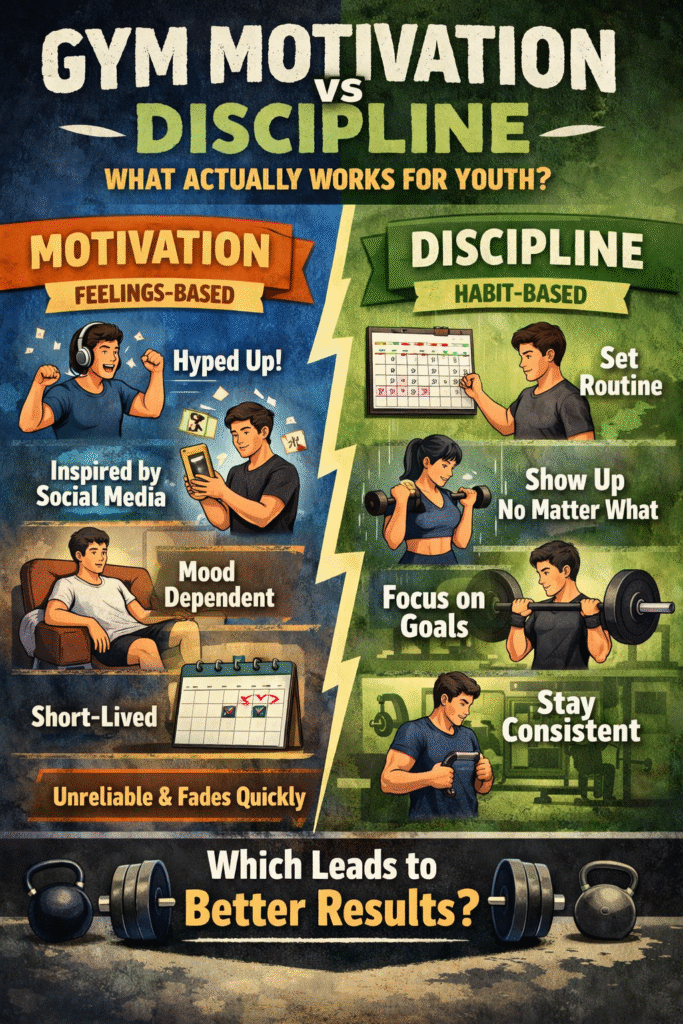
Gym motivation vs discipline is one of the most confusing topics for today’s youth. Many young people join the gym feeling highly motivated, but struggle to stay consistent after a few weeks. While motivation helps you start your fitness journey, discipline is what determines whether you continue and achieve real, long-term results. Understanding the difference between gym motivation and discipline is essential for building a sustainable and healthy gym lifestyle.
The biggest reason is confusion between gym motivation vs discipline.
Many youths believe motivation is the key to fitness success. In reality, discipline plays a far more important role. This article explains the real difference between motivation and discipline, why youth struggle with consistency, and what actually works for long-term gym results.



Understanding Gym Motivation
Gym motivation is the emotional drive that pushes a person to start working out. It often comes from external sources such as:
- Watching fitness transformation videos
- Feeling insecure about body image
- Wanting quick physical change
- Social media influence
- Peer pressure
Motivation feels powerful because it creates excitement and urgency. However, it has a major weakness.
Motivation Is Temporary
Motivation is not stable. It depends on mood, energy levels, and external inspiration. When progress slows down or life becomes stressful, motivation quickly disappears.
This is why many young people:
- Start gym enthusiastically
- Train intensely for 2–3 weeks
- Miss sessions frequently
- Eventually stop going altogether
Motivation can help you start, but it cannot help you continue.
What Is Discipline in the Gym?


4
Discipline is the ability to follow a routine regardless of mood or motivation. It is a habit-driven approach rather than an emotion-driven one.
Gym discipline means:
- Training even when you feel tired
- Following a schedule instead of excuses
- Showing up without waiting for motivation
- Focusing on long-term goals
Discipline may seem boring, but it is the foundation of real fitness success.
Why Discipline Works Better Than Motivation
Discipline creates structure. It removes decision-making and emotional dependency. Once gym becomes a habit, it requires less mental effort to continue.
This is why disciplined individuals:
- Stay consistent during bad days
- Continue despite slow progress
- Achieve visible results over time
Gym Motivation vs Discipline: A Clear Comparison
| Motivation | Discipline |
|---|---|
| Emotion-based | Habit-based |
| Short-term | Long-term |
| Depends on inspiration | Depends on routine |
| Easily fades | Builds consistency |
| Starts gym journey | Sustains gym lifestyle |
Motivation gets you to the gym.
Discipline keeps you there.
Why Youth Depend Too Much on Motivation



4
Modern youth fitness culture is heavily influenced by social media. Platforms promote unrealistic body transformations, extreme workouts, and misleading timelines.
This leads to:
- Unrealistic expectations
- Constant comparison
- Impatience
- Self-doubt
When results do not match social media standards, motivation drops. Without discipline, consistency breaks.
Gym progress is slow, repetitive, and often invisible in the early stages. Social media does not show this reality.
The Science Behind Consistency and Habit Formation
Studies in behavioral psychology show that habits outperform motivation. Motivation fluctuates, but habits remain stable once formed.
According to research:
- Habits take approximately 30–60 days to form
- Repetition strengthens neural pathways
- Consistency reduces mental resistance
Discipline converts gym from a “task” into a “normal part of life.”
What Actually Works for Youth?
The most effective approach is discipline supported by controlled motivation.
Motivation should act as a spark, not fuel.
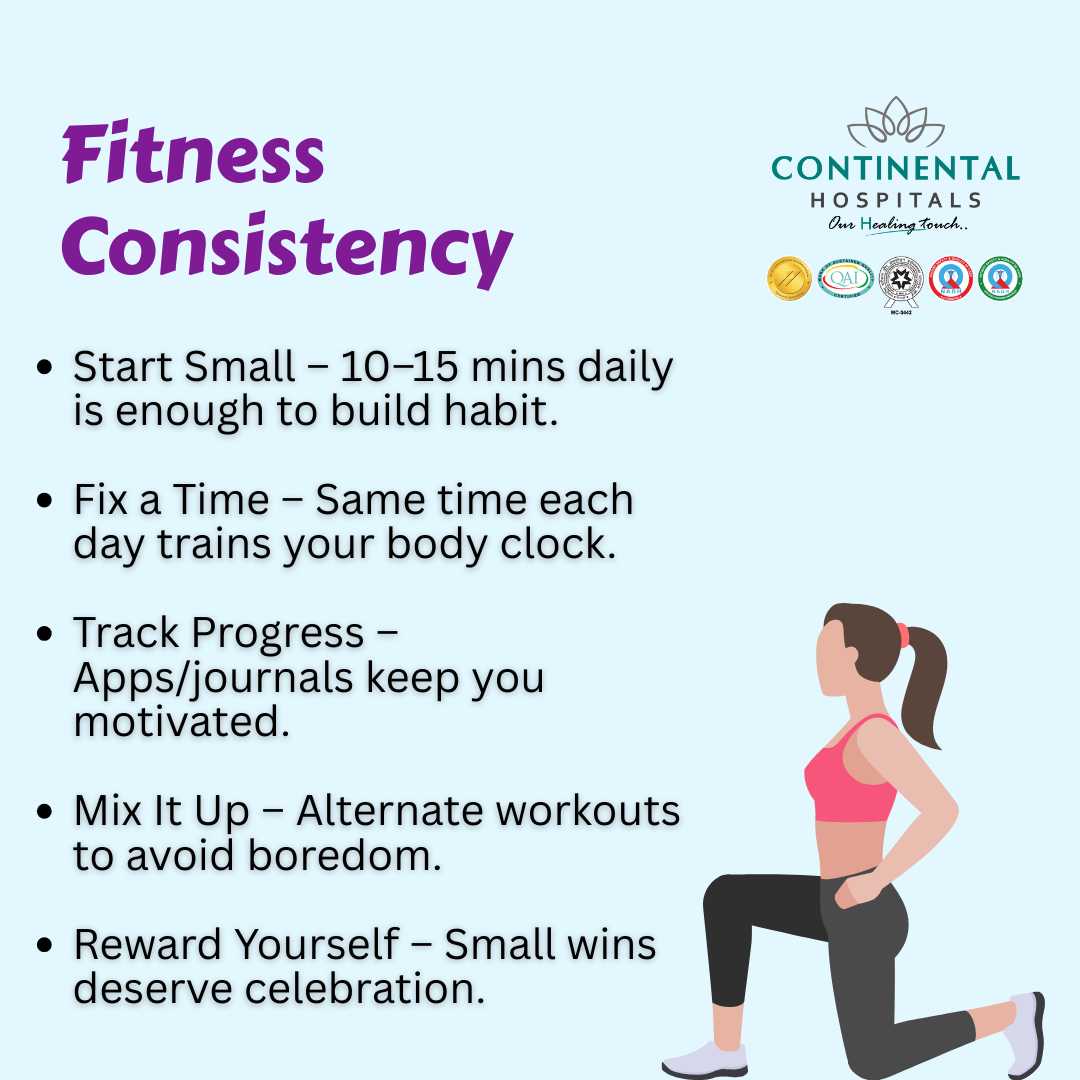
Practical Discipline Strategies for Youth
1. Fix Your Gym Time
Choose a fixed time every day. This reduces decision fatigue and mental negotiation.
2. Follow the Minimum Effort Rule
On low-energy days, commit to a short workout. Showing up matters more than intensity.
3. Track Performance, Not Appearance
Focus on:
- Strength increase
- Endurance improvement
- Workout completion
Avoid daily mirror checks.
4. Eliminate Emotional Decision-Making
Do not ask, “Do I feel like going today?”
Ask, “Is it gym time?”
5. Prioritize Sleep and Recovery
Discipline fails without recovery. Poor sleep reduces energy and increases burnout.
Motivation Is Not the Enemy
Motivation still has value. It can:
- Help beginners start
- Push harder on difficult days
- Reinforce long-term vision
However, motivation should support discipline, not replace it.
Use motivation for:
- Goal setting
- Occasional inspiration
- Reflection and progress review
Common Mistakes Youth Make in the Gym
- Chasing motivation daily
- Overtraining in early stages
- Ignoring rest and recovery
- Comparing progress with others
- Expecting fast results
Avoiding these mistakes improves consistency and mental health.
Discipline Builds More Than Muscles
Discipline in gym improves:
- Time management
- Mental resilience
- Confidence
- Stress control
- Lifestyle structure
These benefits extend beyond fitness and positively affect academic, professional, and personal life.
Realistic Timeline for Gym Results
- 0–1 month: Habit formation
- 1–3 months: Strength improvement
- 3–6 months: Visible physical changes
- 6+ months: Lifestyle transformation
Those who stay disciplined for six months often appear “naturally fit,” although the process was gradual.
Final Verdict: Gym Motivation vs Discipline
Motivation is emotional. Discipline is practical.
Motivation helps you begin, but discipline helps you continue.
Motivation is optional. Discipline is non-negotiable.
For youth aiming for long-term fitness success, discipline is the deciding factor.
Frequently Asked Questions (Yoast SEO)
Is gym motivation enough for long-term fitness?
No. Motivation fades. Discipline maintains consistency.
How long does it take to build gym discipline?
Most people develop discipline within 30–45 days of consistent training.
What should I do when I feel unmotivated?
Follow your routine anyway. Motivation often appears after the workout.
Can discipline be learned?
Yes. Discipline develops through repetition and structured habits.
Conclusion
The debate between gym motivation vs discipline is common among youth. However, the answer is clear. Motivation starts the journey, but discipline completes it.
If you want real results:
- Stop waiting for motivation
- Build habits
- Stay consistent
- Trust the process
Fitness success is not about intensity or inspiration. It is about showing up repeatedly.
Our Website – Click here
Our Website – Click here