
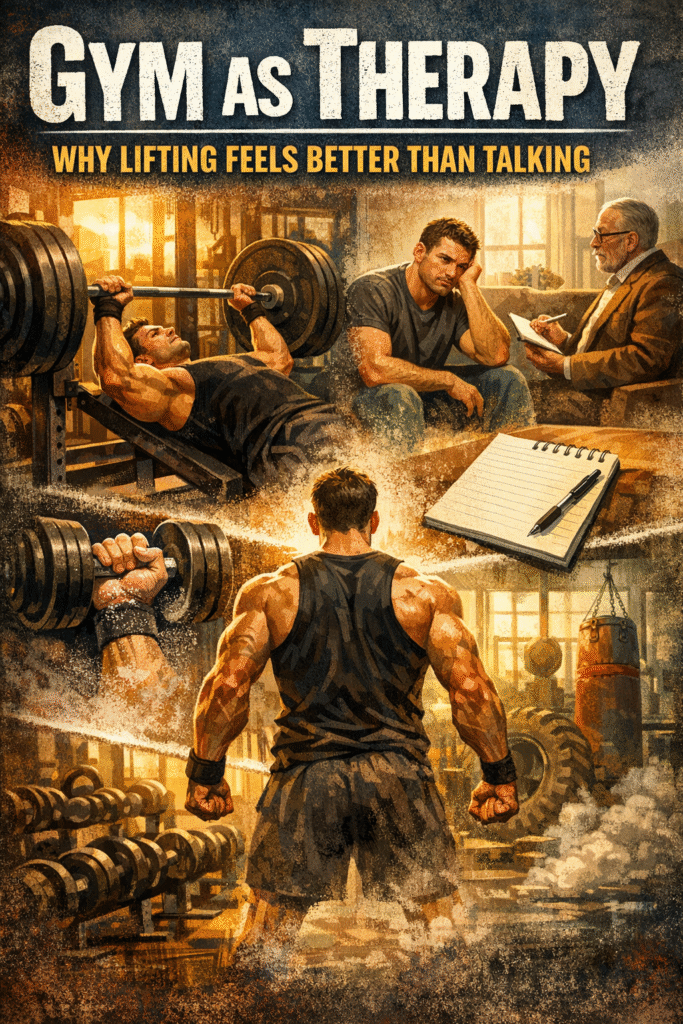
When Silence Feels Better Than Words
Gym as Therapy is not just a trend — it’s a reality for millions of young people who find emotional relief through lifting weights. For those who struggle to express feelings through words, the gym becomes a place of healing, focus, and mental clarity. Instead of talking about stress, anxiety, or pain, they lift it, breathe through it, and release it through physical effort.
Not everyone feels comfortable opening up in conversations. Sometimes silence, movement, and discipline work better than long talks. This is why gym as therapy feels more powerful than talking for many people — it allows emotions to be processed through action, not explanation.
This is where the idea of “Gym as Therapy” comes from.
You walk in feeling heavy inside.
You lift heavy outside.
You walk out lighter.
No long conversations.
No explaining your emotions.
Just movement, sweat, breathing, and silence.
This blog explains why lifting often feels better than talking, how gym helps mental health, and why so many people say:
“The gym saved me.”
What Does “Gym as Therapy” Really Mean?
Gym as therapy does not mean replacing doctors or professional therapy.
It means using physical training as emotional release.
Talking therapy focuses on:
- Words
- Reflection
- Emotions
- Past experiences
Gym therapy focuses on:
- Action
- Physical effort
- Discipline
- Present moment
Both are powerful.
But for many people, lifting speaks louder than words.
Why Talking Doesn’t Work for Everyone
Talking about feelings is helpful, but it isn’t easy for everyone.
Common Problems with Talking Therapy
- You don’t know what to say
- You don’t want to sound weak
- You feel misunderstood
- You don’t trust people easily
- You don’t like repeating your pain
Many young men and women grow up learning to hide emotions, not explain them.
So instead of talking, they:
- Bottle things up
- Distract themselves
- Feel frustrated
The gym gives them another option — release without explanation.
The Science Behind Gym as Therapy
This isn’t just emotional. It’s biological.
1. Endorphins: The Natural Mood Boosters
When you lift weights or exercise:
- Your body releases endorphins
- Endorphins reduce pain and stress
- They create a calm, positive feeling
This is why people say:
“I feel better after a workout, even on bad days.”
2. Cortisol Reduction (Stress Hormone)
Stress increases cortisol, which causes:
- Anxiety
- Fatigue
- Overthinking
- Poor sleep
Regular workouts:
- Lower cortisol levels
- Balance stress hormones
- Improve sleep quality
3. Dopamine & Confidence Loop
Every workout gives you:
- Small wins
- Progress
- Physical proof of effort
This releases dopamine, the reward chemical.
You start trusting yourself more.
Why Lifting Weights Feels Different from Cardio
Cardio helps, but lifting hits differently.
Reasons Weight Training Feels Therapeutic
- You physically carry and move resistance
- You feel stronger session by session
- Progress is measurable
- You feel in control
Lifting is symbolic:
You lift what feels heavy — inside and outside.
Gym as Therapy for Anxiety
Anxiety lives in the future:
- “What if this happens?”
- “What will people think?”
- “What if I fail?”
The gym forces you into the present moment.
When you lift:
- You focus on breathing
- You focus on form
- You focus on reps
There is no space for overthinking.
That’s mindfulness — without sitting still.
Gym as Therapy for Depression
Depression brings:
- Low energy
- Hopelessness
- Self-doubt
The gym gives:
- Routine
- Structure
- Physical movement
- Visible improvement
Even on days when motivation is zero, just showing up:
- Creates momentum
- Builds self-respect
- Breaks the cycle of inactivity
Gym as Therapy After Heartbreak
Heartbreak is one of the biggest reasons people join the gym.
Why?
Because:
- Pain needs direction
- Emotions need release
- Silence feels safer than talking
In the gym:
- Tears become sweat
- Anger becomes strength
- Sadness becomes discipline
You don’t heal overnight.
But you grow stronger — mentally and physically.
The Gym Doesn’t Judge You
Unlike people:
- The weights don’t interrupt
- The mirror doesn’t lie
- The dumbbells don’t judge
Everyone in the gym:
- Is fighting something
- Has insecurities
- Is there for personal reasons
That shared silence is powerful.
How Gym Builds Mental Discipline
Mental health isn’t only about feelings.
It’s about habits.
The gym teaches:
- Consistency
- Patience
- Delayed gratification
- Self-control
You learn:
- To show up even when tired
- To trust the process
- To accept slow progress
These skills transfer to life.
Gym as Therapy for Low Confidence
Confidence doesn’t come from motivation quotes.
It comes from keeping promises to yourself.
Every workout:
- Builds trust with yourself
- Improves posture
- Improves body language
You walk differently.
You speak differently.
You think differently.
Why Silence in the Gym Is Healing
Talking forces you to relive pain.
Lifting lets you release it.
Silence allows:
- Reflection without pressure
- Emotional processing
- Inner calm
Music + movement + effort = therapy.
Gym vs Talking Therapy: Not a Competition
Let’s be clear:
- Therapy is important
- Professional help matters
- Talking saves lives
But gym therapy is:
- Accessible
- Affordable
- Immediate
The best approach?
👉 Both together, if possible.
When Gym Alone Is Not Enough
Gym helps, but it’s not magic.
Seek professional help if:
- You feel numb all the time
- You have harmful thoughts
- You avoid life completely
- You feel hopeless constantly
Strength includes asking for help.
How to Use Gym as Therapy (The Right Way)
1. Train with Intention
Don’t rush workouts.
Be present.
2. Avoid Overtraining
More pain ≠ more healing.
3. Focus on Progress, Not Perfection
Healing is not linear.
4. Use Music Wisely
Choose music that grounds you, not only aggressive hype.
5. Respect Rest Days
Recovery is part of therapy.
Why Gen-Z Is Choosing Gym Over Talking
- Fast-paced lives
- Social media pressure
- Emotional burnout
- Desire for independence
The gym feels:
- Private
- Empowering
- Honest
No filters.
No pretending.
Real Reason Gym Feels Better Than Talking
Because:
- You do something
- You feel something
- You become something
Talking explains pain.
Gym transforms it.
FAQs (For SEO & Featured Snippets)
Is gym really good for mental health?
Yes. Regular exercise improves mood, reduces stress, and boosts confidence naturally.
Can gym replace therapy?
No. Gym supports mental health but does not replace professional treatment when needed.
Why do I feel calm after lifting weights?
Because exercise releases endorphins and lowers stress hormones.
Is gym good for anxiety and depression?
Yes, when combined with proper rest, nutrition, and support.
How often should I train for mental health?
3–5 times a week is ideal for balance.
Conclusion: Strength Is Not Just Physical
The gym doesn’t fix everything.
But it gives you space to breathe, time to heal, and strength to continue.
Some people heal by talking.
Some heal by lifting.
Both are valid.
If the gym helps you feel alive again —
then yes, for you,
Gym is therapy.
Our Website – Click here
Our Contact – Click here