
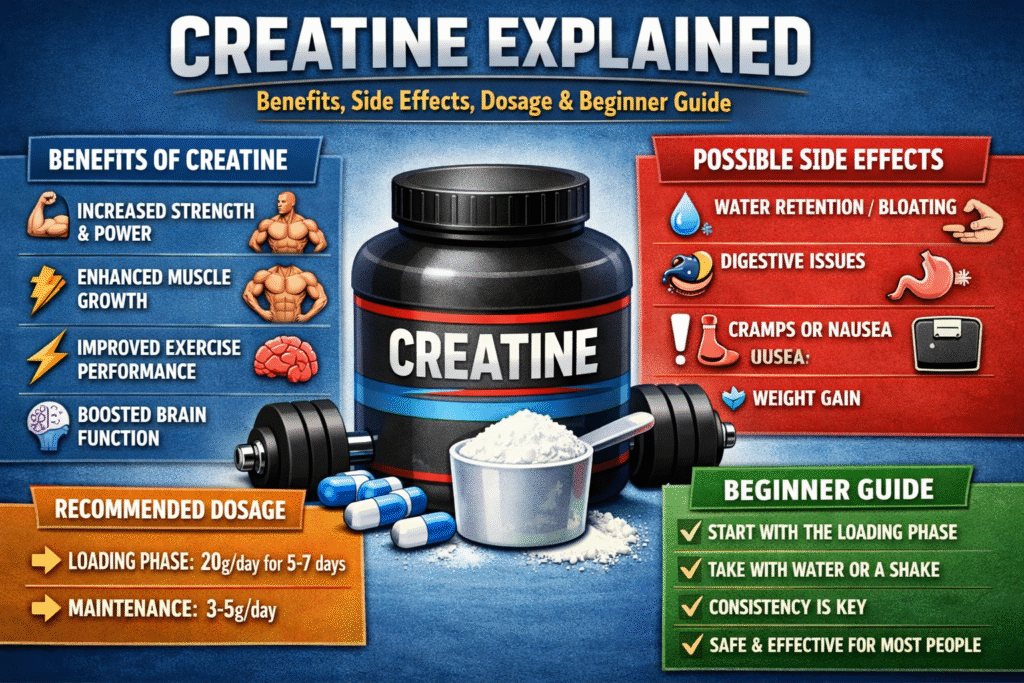
Creatine benefits and side effects are one of the most searched topics in the fitness and gym industry today. Many gym beginners and experienced athletes use creatine to improve strength, muscle growth, and workout performance. However, confusion still exists regarding its safety, dosage, and long-term health impact. Because of this, understanding creatine benefits and side effects correctly is essential before adding it to your fitness routine.


4
Creatine benefits and side effects are one of the most searched topics in the fitness and gym industry today. Many gym beginners and experienced athletes use creatine to improve strength, muscle growth, and workout performance. However, confusion still exists regarding its safety, dosage, and long-term health impact. Because of this, understanding creatine benefits and side effects correctly is essential before adding it to your fitness routine.
This complete guide explains everything about creatine in a clear, science-based, and beginner-friendly way.
What Is Creatine?
Creatine is a naturally occurring compound found in the human body, mainly stored in skeletal muscles. It is produced from three amino acids: arginine, glycine, and methionine. The liver, kidneys, and pancreas work together to synthesize creatine, which is then transported to muscle cells.
In addition to natural production, small amounts of creatine are obtained from food sources such as red meat and fish. However, the amount received through diet alone is usually insufficient for people who train intensely. Therefore, supplementation has become common among gym-goers and athletes.
Nearly 95% of the body’s creatine is stored in muscles, where it plays a vital role in short-duration, high-intensity exercise.
How Creatine Works in the Body



To fully understand creatine benefits and side effects, it is important to understand how creatine works inside the body.
Creatine supports the ATP (Adenosine Triphosphate) energy system, which is responsible for supplying energy to muscle contractions. During intense workouts, ATP levels drop rapidly. At this point, creatine helps regenerate ATP more quickly.
As a result, muscles are able to produce energy faster during heavy lifting and explosive movements.
In simple terms, creatine helps you:
- Lift heavier weights
- Perform more repetitions
- Maintain strength for longer
- Recover faster between sets
Types of Creatine Supplements
Creatine Monohydrate (Best Option)
Creatine monohydrate is the most researched and widely used form of creatine. Because of its proven effectiveness, safety, and affordability, it is considered the gold standard.
Additionally, it works equally well for beginners and advanced lifters.
Creatine HCL
Creatine HCL is more soluble in water. However, scientific evidence does not show superior results compared to monohydrate. Moreover, it is significantly more expensive.
Buffered and Liquid Creatine
Buffered creatine and liquid creatine are often marketed aggressively. Nevertheless, they lack strong scientific backing and offer no real advantage.
👉 Final recommendation: Creatine monohydrate remains the safest and most effective choice.
Creatine benefits and side effects: Detailed Explanation

Understanding creatine benefits and side effects allows you to use the supplement correctly and avoid common mistakes.
Creatine Benefits
1. Increased Muscle Strength
One of the most important creatine benefits is improved muscle strength. Because creatine enhances ATP regeneration, it allows better performance during compound lifts such as squats, deadlifts, and bench presses.
Over time, this leads to consistent strength gains.
2. Faster Muscle Growth
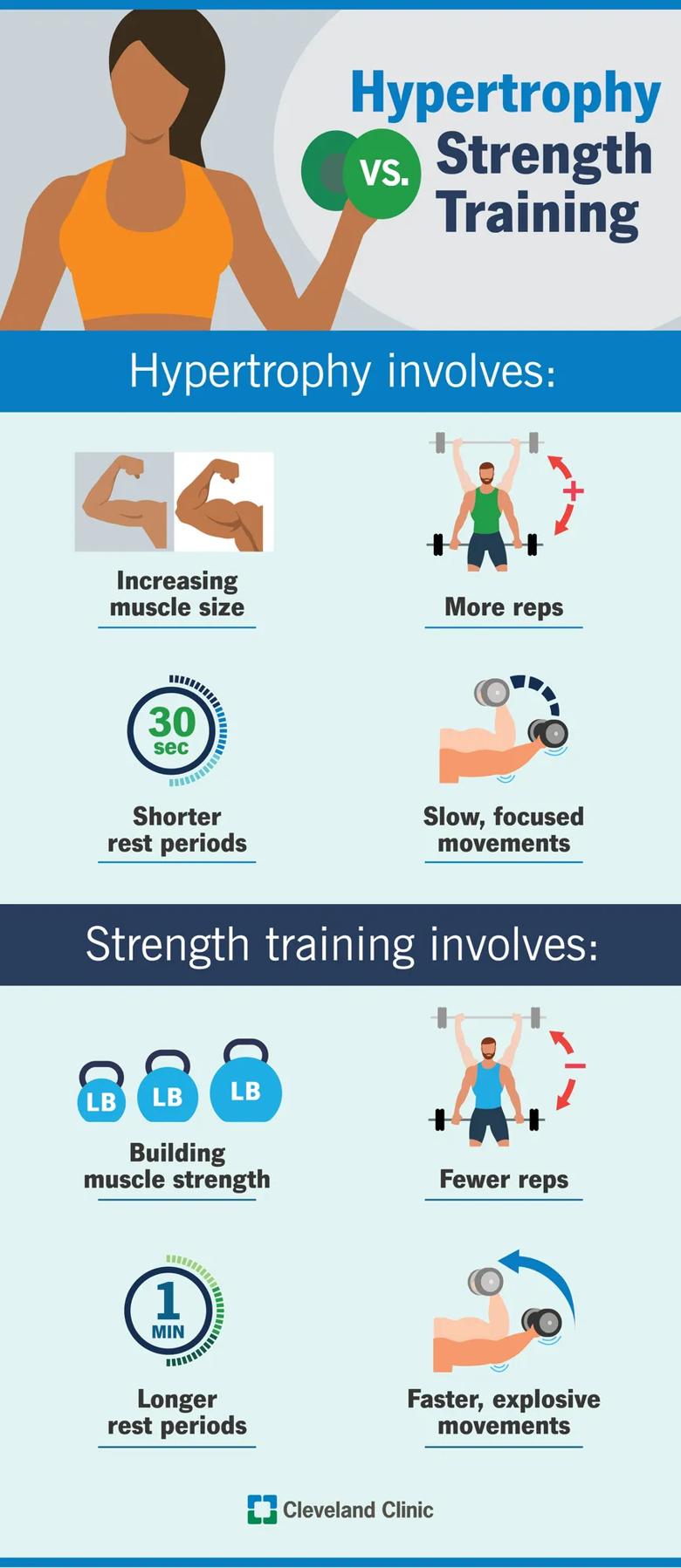
Another major advantage is muscle hypertrophy. Creatine increases training volume by allowing more repetitions and heavier loads. In addition, it draws water into muscle cells, which supports an anabolic environment.
As a result, muscle growth improves gradually and sustainably.
3. Improved Workout Performance
Creatine helps reduce fatigue during high-intensity workouts. Consequently, overall training quality improves, leading to better long-term results.
4. Faster Recovery
Creatine may reduce muscle soreness and improve recovery speed. Therefore, it allows more frequent training without excessive fatigue.
5. Brain and Cognitive Support
Recent research suggests that creatine may support brain energy metabolism. Moreover, it can help improve focus and mental performance during stressful periods.
Creatine Side Effects


When used correctly, creatine has minimal side effects.
1. Water Retention
Creatine increases water content inside muscle cells. As a result, body weight may increase slightly. However, this is not fat gain and is completely harmless.
2. Digestive Discomfort
In some cases, high doses or low water intake may cause stomach discomfort. Fortunately, this can be avoided with proper hydration and correct dosage.
3. Bloating
Bloating is rare and usually temporary. Most importantly, it disappears once dosage and hydration are corrected.
Overall, scientific research clearly shows that creatine benefits and side effects favor safe use in healthy individuals.
Is Creatine Safe for Long-Term Use?
Creatine is one of the most extensively studied supplements in sports nutrition. Multiple long-term studies confirm that creatine does not damage the kidneys or liver in healthy individuals.
However, people with pre-existing kidney conditions should consult a healthcare professional before supplementation.
Correct Dosage of Creatine
Standard Dosage (Recommended)
The most effective and safest dosage is:
- 3–5 grams per day
This method gradually saturates muscle creatine stores within two to three weeks.
Loading Phase (Optional)
Some people choose a loading phase:
- 20 grams per day for 5–7 days
- Followed by 3–5 grams daily
Although loading speeds up saturation, it is not necessary.
Best Time to Take Creatine
Creatine timing is flexible. Consistency matters more than timing.
However, many people prefer taking creatine:
- After workouts
- At the same time every day
How to Take Creatine Properly
To maximize creatine benefits and side effects safety, follow these steps:
- Mix creatine with water or juice
- Avoid hot liquids
- Drink at least 3–4 liters of water daily
Proper hydration significantly reduces side effects.
Creatine for Beginners
For beginners, creatine can be a useful supplement when combined with proper training and nutrition. However, it should never replace exercise discipline or a balanced diet.
When used correctly, creatine benefits and side effects show it is safe even for new gym-goers.
Creatine and Weight Loss
Creatine does not burn fat directly. Nevertheless, it helps preserve muscle mass during calorie deficits. As a result, overall body composition improves.
Creatine for Vegetarians
Vegetarians often have lower natural creatine levels because of limited dietary intake. Therefore, they usually experience stronger benefits from supplementation.
Creatine and Hair Loss: Truth Explained
There is no strong scientific evidence linking creatine to hair loss. Genetics and hormonal factors play a much larger role.
Who Should Avoid Creatine?
Creatine may not be suitable for:
- Individuals with kidney disease
- Pregnant or breastfeeding women
- People advised by doctors to avoid supplements
Frequently Asked Questions
Can creatine be taken daily?
Yes, daily use is safe for healthy individuals.
Do I need to cycle creatine?
No, cycling is unnecessary.
Can creatine be taken with protein powder?
Yes, both supplements work well together.
Conclusion on Creatine benefits and side effects
When used responsibly, creatine benefits and side effects clearly prove that it is one of the safest, most effective, and most researched supplements for muscle growth, strength, and workout performance.
Our Website – Click here
Our Contact – Click here